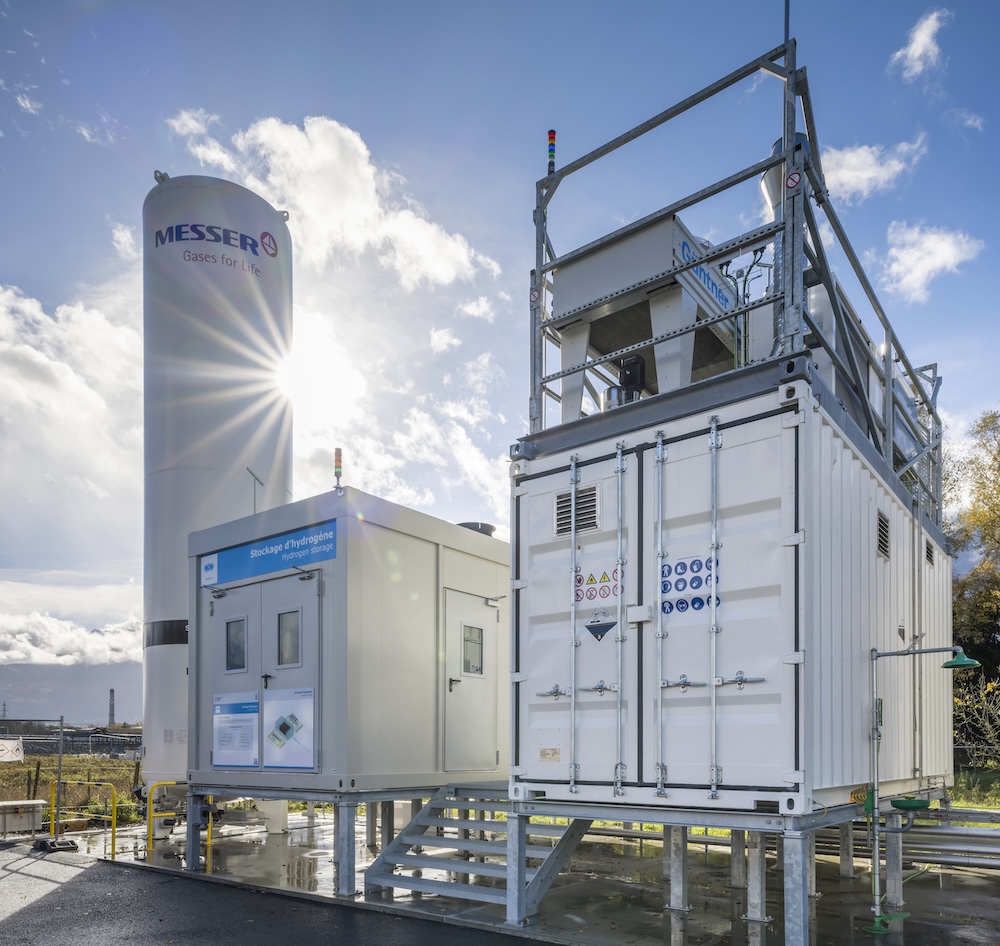

To accelerate the decarbonization of Switzerland’s gas grid, Gaznat launched the UPSOM initiative: A full Power-to-Gas chain converting excess renewable electricity into CO₂-neutral synthetic methane. Working alongside EPFL, Gaznat required an integrated hydrogen storage buffer and a high-efficiency methanation reactor. GRZ was selected for its unique ability to deliver both technologies, enabling end-to-end system integration and advancing a critical pathway for renewable gas.
GRZ was selected to supply both elements, demonstrating unique capabilities across the hydrogen value chain.
The Challenge: Building a Complete, Industrial-Scale Renewable Methane System
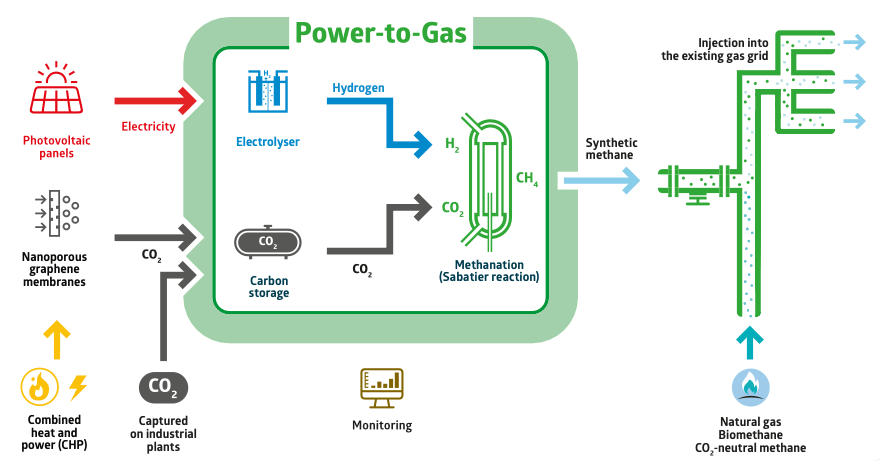
Gaznat’s goal was to validate the full Power-to-Gas value chain — from solar power, to electrolysis, to hydrogen storage, to methanation, to grid injection.
The challenges included:
- Buffering intermittent hydrogen production
- Managing strict industrial-scale safety and certification requirements
- Ensuring stable, high-efficiency catalytic conversion
- Integrating academic and industrial workflows into one coherent system
This project required a partner capable of delivering both the storage and chemical conversion technologies without compromising reliability or industrial readiness.
The Solution: Two Core Technologies, One Integrated Partner
GRZ was uniquely positioned to deliver both technologies required for the project:
1. DASH Solid-State Hydrogen Storage
The DASH module provides a stable, low-pressure hydrogen buffer that absorbs variable electrolyzer output and delivers a steady, controlled hydrogen flow for methanation.
2. UPSOM Methanation Reactor
A high-efficiency Sabatier reactor that catalytically converts renewable hydrogen and captured CO₂ into synthetic methane suitable for grid injection.
Together, these systems enabled a seamless, continuous Power-to-Gas process — from fluctuating inputs to stable renewable gas output.
The Results: A Proven Renewable Gas Pathway
By delivering both the hydrogen buffer and the methanation reactor, GRZ enabled Gaznat and EPFL to complete a fully integrated Power-to-Gas chain in a single pilot installation. The project validates the technical feasibility of producing renewable synthetic methane at grid quality, using only green hydrogen and captured CO₂.
Its performance demonstrates a promising pathway for seasonal storage, sector coupling, and large-scale decarbonization of gas networks across Europe.