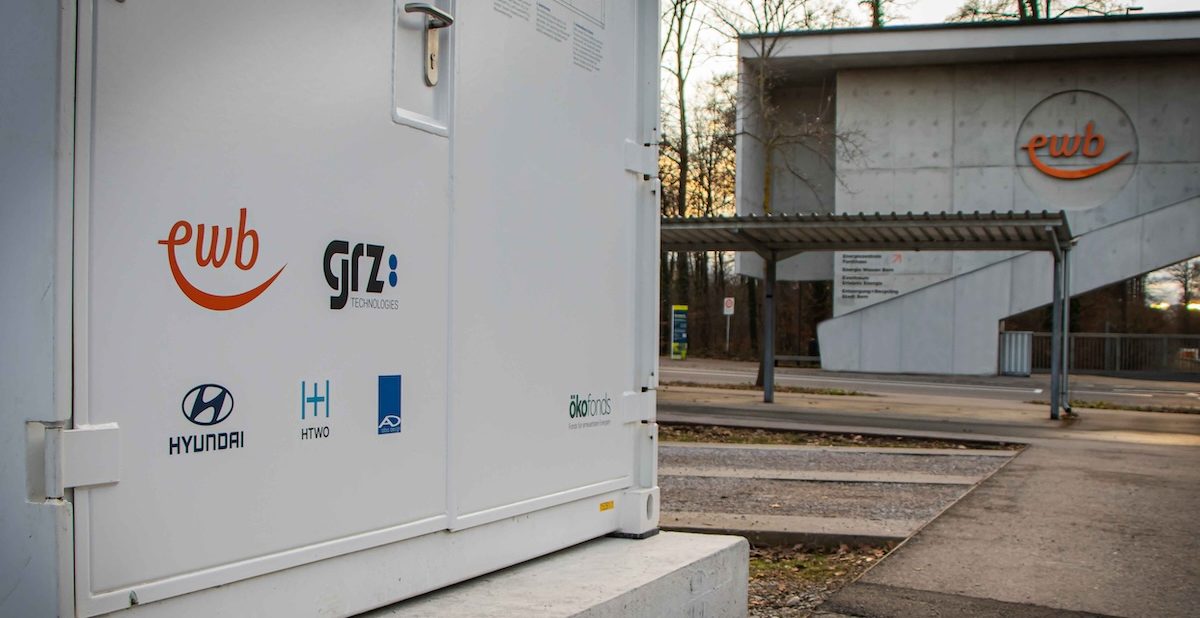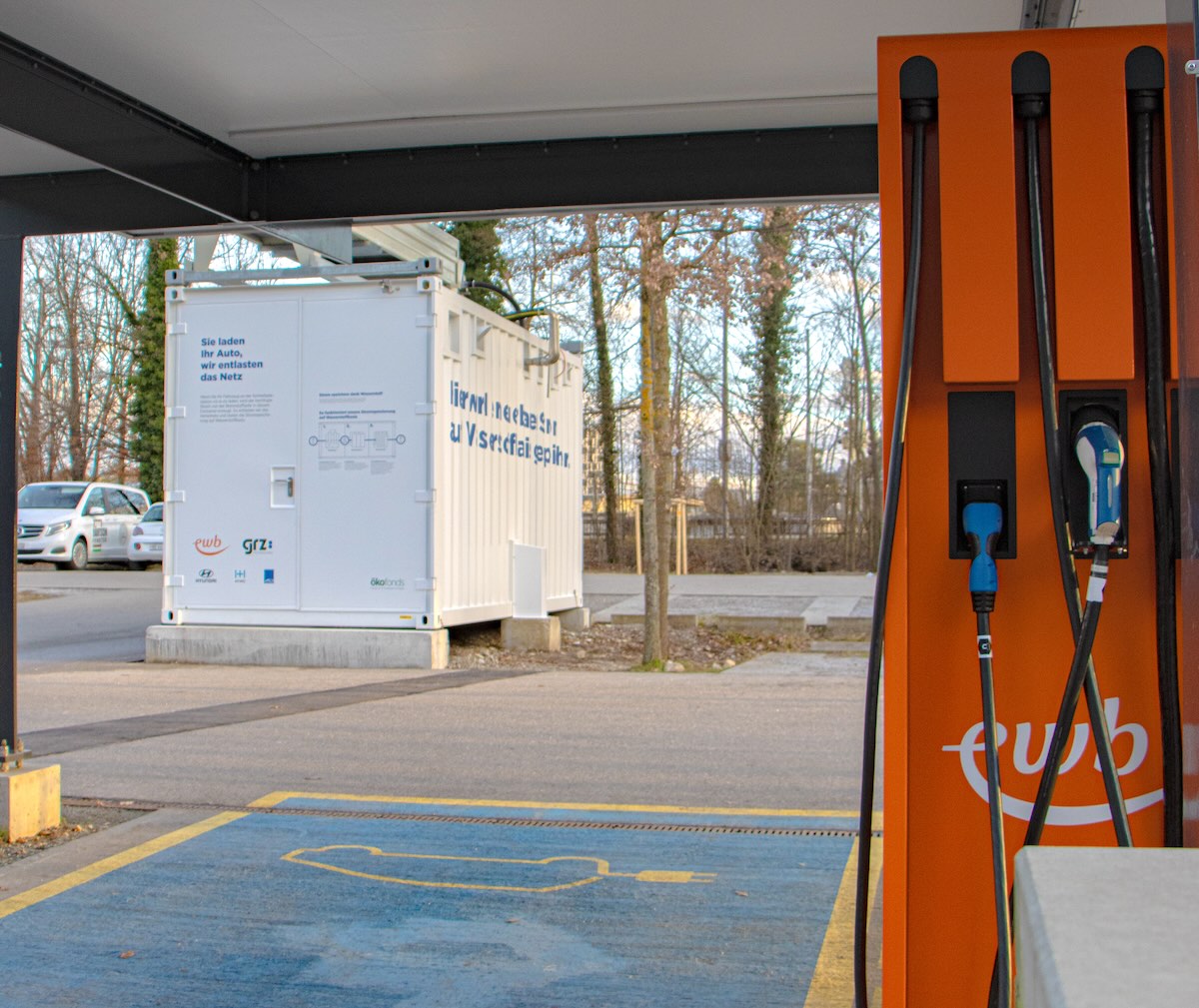

Energie Wasser Bern (ewb), the utility for Switzerland’s capital, sought an innovative solution to manage the grid impact of high-demand EV fast-chargers. At their Forsthaus energy center—a major renewable hub combining waste-to-energy, biomass, and solar generation—ewb partnered with GRZ and Hyundai Motor Company to launch a pioneering pilot project. GRZ’s DASH Power system was deployed to store surplus solar energy as green hydrogen, providing a reliable, emissions-free power source to stabilize the grid and support the expansion of sustainable mobility.
The Challenge: The Unstable Grid vs. The EV Revolution
As a leader in sustainable energy, ewb faced a critical challenge: the volatile, high-power demand of public EV fast-chargers was putting a strain on the city’s power grid. The goal was to find a clean energy solution that could store surplus solar power and deploy it on demand, creating a stable, emissions-free charging hub without relying on fossil fuels or requiring costly grid reinforcements.